Arbeitsgruppen während der World Teachers' Conference 2027
Desarrollo de las fuerzas del pensar en los jóvenes a partir de la observación fenomenológica del mundo
Los jóvenes se abren al mundo. Para que en ese encuentro desarrollen las propias fuerzas de pensamiento que están surgiendo, se nos presenta el desafío de acercar al aula los fenómenos y que aprendan a observar desde sí mismos («Ich schaue in die Welt»). Presentaremos experiencias de clases en relación a la imagen del joven, el desarrollo del trabajo anual y propuestas para crear una atmósfera artística, con un ritmo que contemple lo que proviene de las fuerzas de la noche; propiciando que puedan surgir, desde la mirada del joven, las fuerzas del pensar propio hacia una imagen de mundo cada vez más abarcativa.
The development of young people’s cognitive abilities through the phenomenological observation of the world
Young people are opening themselves up to the world. In order to help them develop the strength of their emerging powers of thought, we face the challenge of bringing into the classroom phenomena that can be observed and experienced by young students («Ich schaue in die Welt»). We will present examples of classroom activities relating to young people’s self-image and the development of Senior projects and also ideas that contribute to create an artistic atmosphere, with a rhythm that takes into account what arises from the forces of the night. In this way, we encourage the forces of independent thought to emerge from within the young person’s own perspective, leading toward an ever more comprehensive view of the world.
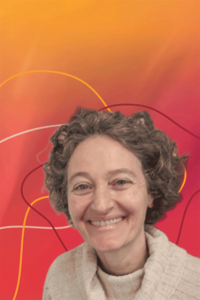
Moira Alloatti
hat Chemie an der Universität Buenos Aires studiert. Sie ist Expertin für anorganische Prozesse und das Mineralreich und absolvierte eine Ausbildung in Goetheanismus bei Holdrege.
Moira Alloatti ist seit über 20 Jahren Oberstufenlehrerin.
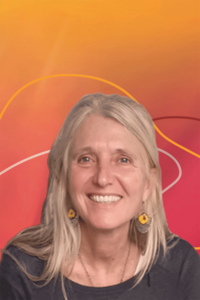
Tamara Henke
hat Literaturwissenschaften an der Universität Buenos Aires studiert und arbeitet heute als Dozentin. Sie ist die Koordinatorin des Seminars für Waldorf-Sekundarschulen in Buenos Aires.
Tamara Henke ist seit über 20 Jahren Oberstufenlehrerin.
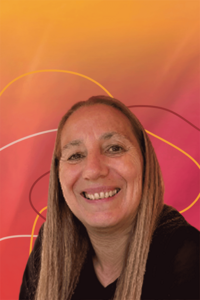
Lidia Vilchez
hat Geschichte an der Nationaluniversität Buenos Aires studiert und arbeitet heute als Dozentin.
Lidia Vilchez ist daneben seit über 20 Jahren Oberstufenlehrerin für Geografie und Geschichte sowie Koordinatorin für die Ausbildung in der Waldorfpädagogik.
Living and Learning in a Language Class
We are looking for ideas, inspiration, approaches, content, and methods to free foreign language instruction from its one-sided focus on pragmatic results. What are the pedagogical aspects of foreign language instruction for the new generation in the 21st century, at the intersection of life and learning, of AI and self-awareness? How and where can we find sources of imagination and creativity as we prepare our lessons?
Vivre et apprendre en cours de langue
Nous sommes à la recherche d’idées, d’inspirations, de démarches, de contenus et de méthodes pour dépasser une vision strictement pragmatique de l’enseignement des langues. Quels sont, au XXIᵉ siècle, les enjeux essentiels pour les nouvelles générations ? Comment articuler apprentissage et expérience de vie, intelligence artificielle et présence authentique à soi, performance et créativité ? Et surtout : comment faire émerger l’imagination et la créativité dans nos pratiques pédagogiques ? Où puiser l’inspiration pour renouveler nos préparations et nos façons d’enseigner ? Nous proposons d’explorer ensemble ces questions, de partager nos expériences et de découvrir des exercices ainsi que des pratiques inspirantes.
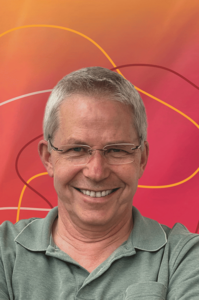
Siegmund Baldszun
Waldorfschüler, Ausbildung als anthroposophischer Heilpädagoge und Realschullehrer, 38 Jahre Musik- und Fremdsprachenlehrer in Göppingen und Stuttgart.
Daneben Lehrtätigkeit Seminaren und im Team der Semaine Française mit dem Verein Mensch&Sprache e.V.
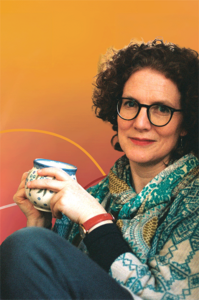
Alexandra Spencer
Originally from the UK, Alexandra Spencer has been a language teacher at the Freie Waldorfschule Kreuzberg in Berlin since 2009. As a teacher and teacher-trainer with a particular focus on the lower and middle school, her aim is to help create authentic spaces for children to experience themselves speaking, singing, and playing in the English language. Through the rich tradition of nursery rhymes as well as the use of gestures and actions, children in the lower school are invited to experience the language through the body. In the middle school the careful choice of topics, poems and songs engage the children's interest and nurture their development.
Alexandra Spencer has been working in the field of teacher-training, mentoring and coaching in Germany and internationally for many years. As a singer-songwriter as well as a teacher, she has made recordings of countless nursery rhymes and pentatontic songs, soon to be available online as a resource for Waldorf teachers.
Literacy in the Age of AI: How Are We Fostering Authentic Relationships to Reading and Writing in Students of the Upper School
Literacy is a social/spiritual activity. With the lure of AI-generated work creating less incentive to engage in an authentic relationship to language, what specific strategies can we explore for our teaching that strengthen an embodied, nuanced relationship to literary activities.
Carol Ann Bärtges
As an alumna, Carol Bärtges has long been associated with the New York City Rudolf Steiner School and has worn many hats – as a student there, as a parent of two graduates, as a class teacher, and for most of her career as a high school teacher of Literature, Speech, and Drama. Currently Carol serves as the Upper School Chair and as a member of the Upper School English department. An inveterate New Yorker, Carol lives on the Lower East Side, the former tenement neighborhood of immigrants. She is the author of numerous articles on Waldorf education as well as topics in comparative literature and the co-editor of the book, Educating as an Art.
Üben und forschen – Wirkung der sechs Seelenübungen in der Pädagogik
Als Lehrerinnen und Lehrer wollen wir, dass die Kinder in der Schule etwas lernen, dass sie üben und sich im Üben zu ihrem eigenen Wesenskern hin entwickeln. Wenn das unser Anliegen ist, müssen wir uns als Lehrerinnen und Lehrer selbst auch aktiv und bewusst entwickeln, müssen üben und mehr und mehr lernen, unsere Seelenkräfte bewusst wahrzunehmen und zu gestalten. Dieses «Erkenne Dich selbst» ist eine Grundlage der Waldorfpädagogik.
Practice and research – the effect of the six soul exercises in education
As teachers, we want our students to learn, to internalize, and to develop towards their own inner essence. We must, equally, develop ourselves actively and consciously, learning to perceive and shape our own soul powers. This «Know Yourself» is a foundational principle of Waldorf education.
Bärbel Bläser
Geb. 1964. Seit 35 Jahren tätig als Klassenlehrerin sowie in den Fächern Malerei und Audiopädie, vor allem an der Windrather Talschule in Velbert-Langenberg; sieben Jahre lang Referentin für Fragen inklusiver Waldorfpädagogik beim Bund der Freien Waldorfschulen. Mitarbeiterin im Initiativkreis der Pädagogischen Sektion in Deutschland.
Cornelia Debus
Geb. 1970. Seit 19 Jahren tätig als Lehrerin, davon 14 Jahre in den Fächern Kunstbetrachtung und Religion an der Waldorfschule in Wendelstein, seit fünf Jahren Klassenlehrerin in Leipzig. Mitglied im Beirat der Pädagogischen Forschungsstelle und Mitarbeiterin im Initiativkreis der Pädagogischen Sektion in Deutschland.
Finding Direction through Collegial Conversation
How can a college of teachers become a genuine learning community? One where colleagues think, learn and grow together — where every voice contributes, and shared understanding becomes the foundation for moving the school forward. This active, participatory working group explores collegial practices for meaningful dialogue and collaborative development, based on the Compass Cards framework for Steiner Waldorf education.
How to support new teachers without special Waldorf education in learning and working in the classroom
We will look at how the leadership in a school can organise support and scaffolding for new, uneducated teachers. Which help is relevant? We will present and problematize some of the core competencies/qualities that are vital for a teacher. We will discuss these from different perspectives with the help of some of the generative principles in Waldorf education as described by Martyn Rawson. Some singing and drawing is planned for.
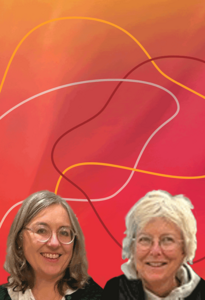
Caroline Bratt
is since 2006 the head of Waldorflärarhögskolan in Stockholm, Sweden, with responsibility for Waldorf preschool- and teacher education. Before that she was a class-teacher. She been part in building a research collaboration together with the institutions and federations in Norway, Finland and Sweden (NORENSE, Nordic Research Network in Steiner Education) with the aim of strengthening and developing waldorf pedagogy and creating sustainable conditions for waldorf teacher education. She is the chair of the International Network for Academic Steiner Teacher Education (INASTE).
Maria Norberg
is the Chair of the Waldorf School Federation in Sweden. She also serves as a school director for several Waldorf schools. She has also been a member of the Haager Kreis/ICSWE since 2021. She is a trained social worker, therapeutic (curative) educator, principal, psychotherapist, and certified school director. Her work is grounded in the concepts of resilience, empowerment and the cultivation of KASAM. She is dedicated to helping individuals of all ages find clarity, courage, and meaningful paths forward in life and learning.
Nature as an Educator: the Daily relationship between children and adults with Nature
A path of observation and practical experiences for communities, daycare centers, and families.
Based on observation and the context of each individual, we will co-create a path towards an understanding of the importance of the individual's relationship with nature, so that it becomes a foundation for pedagogical practice and learning in kindergarten.
Natureza Educadora: a relação Diária da criança e do adulto com a Natureza
Um caminho de observação e de vivências práticas para comunidades, jardins de infância e famílias.
Partindo da observação e do contexto de cada um, iremos co-criar um caminho para a compreensão da importância da relação individual com a natureza, para que esta seja um alicerce para a prática pedagógica e aprendizagem no jardim de infância.
Marta Florêncio
With a degree in early childhood education, she has worked as an educator since 2001 and as an adult educator since 2010. She is a member of the board of directors of the Associação Infância Viva and a representative of the Portuguese Association of Waldorf Schools. She is in the coordination group for Waldorf pedagogy training at the PerCurso Association and a member of the International Forum for Steiner/Waldorf Education (Hague Circle). She supports institutions that intend to work with Waldorf pedagogy, providing mentoring and working with families.
António Guedes
Trained in Waldorf Pedagogy, he has worked as an educator since 2016, supporting children and teachers in both kindergarten and school settings in specific areas such as woodworking, carpentry, gardening, biodynamic agriculture, and working with families. Currently, he leads the community gardens project, is a member of the Barlavento biodynamics study group, and of the group promoting participatory biodynamic certification in Portugal, where he supports the organization of meetings, studies, and dissemination of topics related to biodynamics and education.
Personal development and learning for life in vocational education. A hands-on workshop.
Some Waldorf upper schools lead to qualifications as carpentry, building, health care, bio-dynamic farming, etc. Vocational education is attractive for students who have less interest in or talents for the academic subjects and long for practical expertise. In this workshop we will be sharing methods for and background about these equivalent alternative upper school curriculum tracks which offer personal development and long-life learning by and for hands-on working skills.
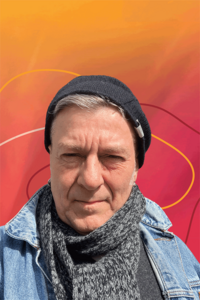
Wim Foquet
taught more than thirty years at several Steiner schools in Flandres. Because of his experience with the vocational streams in Steiner pedagogy and his involvement in developing and founding the first Steiner vocational programme in Flandres, he joined the curriculum team of the secondary Steiner schools community, with an emphasis on labour-market orientation and dual qualifications. He spends part of his free time reading about Rudolf Steiner’s epistemology.
Marcus van Besouw
worked for 37 years at the Rudolf Steiner Secondary School in Lier, Flanders. He co-founded the vocational stream «Sustainable Living» in 2008. In that vocational department he taught physical education and general reflective subjects and was responsible for supervising the vocational internships. He now uses his experience and his enthusiasm for teaching to mentor young teachers. Sailing, hiking, cycling, running, reading and enjoying beauty and conviviality with others make him happy when he is not working.
Working with Parents – Building the Community of the School
The child flourishes when teachers and parents walk a shared path of trust, respect, and conscious collaboration. This experiential workshop explores how we can nurture living school communities through meaningful dialogue, healthy boundaries, and a shared commitment to the child's development. Together, we will reflect on the pedagogical, practical, and spiritual dimensions of this work and discover ways to strengthen the life of our schools.
Zsolt Galsai
was born in Budapest and was among the students of the first Waldorf school established in Hungary, the Pesthidegkúti Waldorf School, joining its third class in 1991. After completing the four-year full-time Waldorf Teacher Training in Solymár, he spent a year as a volunteer at the Camphill School in Ringwood, England. In 2011, he returned to the Pesthidegkúti Waldorf School, where he had been educated, to begin his work as a class teacher. He has served continuously in this capacity ever since and is currently leading his second class, now in Grade 7. Alongside his teaching responsibilities, he serves as one of the school leaders of the Pesthidegkúti Waldorf School. Since 2022, Zsolt has been a member of the International Forum for Steiner/Waldorf Education (The Hague Circle).
Christina Lærke Vilhelmsen
is the head of the secretary of the Danish federation of Steiner Schools and a Hague Circle member. She is also the represent of Denmark in ECSWE. Since 2007 she has worked for the Danish school movement as a parent member in school boards, as an advisor for teachers and parents in parents' meetings and conversations and done courses for boards of parents. Together with other parents she has done volunteer political work for several years and achieved crucial changes int the Danish laws for Waldorf Schools.
Waldorfschule im Zeitalter der KI – Was bleibt unverzichtbar?
Die Entwicklung der KI schreitet rasant voran – und damit die Unsicherheit vieler Lehrkräfte: Wie sollen wir angesichts dieser Möglichkeiten unterrichten?
Die Medienpädagogik bietet die Möglichkeit, die Besonderheiten der Waldorfpädagogik zeitgemäss zu entwickeln. Andere Fähigkeiten werden wichtiger: Fragen zu stellen, Begegnungen zu gestalten, Erfahrungen zu machen, Verantwortung zu übernehmen und eigene Urteile zu bilden. Diese Lernformen erfordern und schulen Geistesgegenwart statt Geistferne.
Waldorf Schools in the Age of AI – What Remains Essential?
AI is developing rapidly, and many teachers are increasingly uncertain: How should we teach in light of these new possibilities?
Media education offers an opportunity to develop the distinctive qualities of Waldorf education for our time. Other abilities are becoming more important: asking questions, shaping encounters, gaining firsthand experience, taking responsibility, and forming independent judgments. These ways of learning require and cultivate presence of mind rather than mental absence.
Franz Glaw
Spiele, Bewegung und Bothmer-Gymnastik
Begegnungen mit sich, der Gruppe und dem Raum Spiele gemeinsam spielen, Gruppenaufgaben und den Raum neu entdecken durch Bewegungserlebnisse und Übungen aus der Bothmer- Gymnastik Freude auf das gemeinsame Erleben und Reflektieren Welche pädagogischen Entwicklungsräume können durch die Bewegung, die Gruppe und den Raum den Kindern und Jugendlichen angeboten werden.
Bitte bewegungsfreundliche Kleidung mitbringen.
Games, Movement and Bothmer Gymnastics
Encounters with yourself, the group and the space. Play games together, group tasks and rediscover the room through movement. Experiences and exercises from Bothmer-Gymnastics. Take joy in experiencing and reflecting together. What pedagogical development spaces can be offered to children and adolescents by the movement, the group and the space?
Please bring movement-friendly clothing.
Gerlinde Idler
geboren 1968 bei Wien, besuch der Rudolf Steiner Schule Wien-Mauer, staatliche Lehrer:innenausbildung, Sportlehrerin an der Rudolf Steiner Schule Wien-Mauer, Gründung Schulcircus Piccolino in Wien und Ravensburg, seit 2001 Sportlehrerin an der Waldorfschule Freiburg-Wiehre, Leitung Circus Salilero, Mag. Erziehungswissenschaften, Soziologie, Politik, Ausbildung in Bothmer-Gymnastik und Spacial Dynamics, Spieletherapeutin, Ab 2000 Gastdozentin an dieversen Lehrerseminaren im In- und Ausland. Seit 2012 leitende Dozentin für Sport am Lehrerseminar in Kassel.
Leadership as Pedagogical Practice: Cultivating the Health of the School
How can leadership itself become a pedagogical practice that strengthens the life of a school? Leadership is often understood as responsibility, decision-making, and organization. But what if its deeper task is to serve the health and unfolding of the school as a living community? Through shared inquiry, reflection, and practical examples, we will explore leadership as an art of listening, cultivating relationships, and creating the conditions in which pedagogical life can flourish. How might those who carry leadership learn from the school while also working consciously to transform it?
Ben Linstrom
is the School Administrator of Detroit Waldorf School (USA). After eight years as a Waldorf class teacher, he moved into school leadership, where his work focuses on community engagement, governance, faculty collaboration, and cultivating healthy school communities. He is the author of «A Waldorf Education for All» and recently completed a Master of Public Administration with a focus on nonprofit leadership. He continues to explore leadership as a pedagogical practice in Waldorf schools.
Artistic Teaching and Learning for our Times: A Performative Workshop
The growing use of artificial intelligence calls for new perspectives on learning and work. Different forms of embodied learning, rooted in the artistic methods and contents of Waldorf pedagogy, can offer meaningful alternatives. In this workshop we will experience poetry through the medium of performance. Our aim will be to deepen our own experiences of poetry and thereby to explore an artistic approach to teaching poetry which offers pupils exciting new ways of artistic working and learning.
Enseñanza y aprendizaje artísticos para nuestra época: un taller performativo
El uso cada vez mayor de la inteligencia artificial exige nuevas perspectivas sobre el aprendizaje y el trabajo. Diferentes formas de aprendizaje corporal, basadas en los métodos y contenidos artísticos de la pedagogía Waldorf, pueden ofrecer alternativas significativas. En este taller experimentaremos la poesía a través de la performance. Nuestro objetivo será profundizar en nuestras propias experiencias con la poesía y, de ese modo, explorar un enfoque artístico para la enseñanza de la poesía que ofrezca a los alumnos nuevas y emocionantes formas de trabajar y aprender artísticamente.
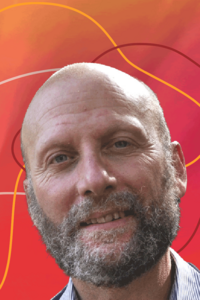
Peter Lutzker
Prof. Dr. Peter Lutzker teaches Waldorf pedagogy, pedagogical anthropology and the methodology of foreign language teaching at the Freie Hochschule Stuttgart (Waldorf Teachers College). He studied music and literature in the United States and Germany before becoming a Waldorf teacher in Germany, where he taught English and Music for 25 years. He has also continually worked in the field of teacher education throughout Europe since 1990. A particular focus of his work has been the integration of the dramatic arts in foreign language teaching and in teacher education.
Identidad es humanidad. Adolescencia un juego entre la comunidad y la individualidad.
La magia de la narración y la poesía como antídoto de la IA. Don Quijote de Cervantes ¿Quién soy yo?
El rubicón de la adolescencia nos lleva al ideal y a un pensar fundamentado. ¿Quién soy yo?
La alteridad me hacer Ser. El Perceval de Wolfram von Eschenbach , 1984 de George Orwell y Demian de Hermann Hesse. ¿Quién soy yo?
Este curso es un encuentro con la adolescencia y su búsqueda en el mundo de hoy. ¿Qué puede ofrecer a los jóvenes la pedagogía waldorf en el mundo de hoy? ¿Cómo acompañamos el espacio entre lo que muestran los jóvenes y su verdadera esencia? ¿Qué sentido tiene el mundo que les ofrecemos?¿Qué tenemos que aprender de ellos? ¿Qué significa lo crístico para los jóvenes? ¿Qué esperan de nosotros?¿Por qué son tan vulnerables? ¿Qué herramientas traen para enfrentarse a las trampas de las fuerzas opositoras?...
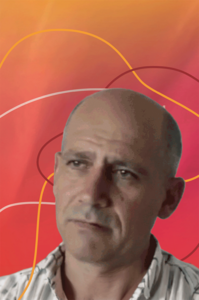
Carlos Malagón
es profesor de Lengua, Literatura, Historia y Ética Cristiana de secundaria y bachillerato en la Escuela Libre Micael de Madrid desde 1994.
Forma parte del Equipo Coordinador de la Formación de Pedagogía Waldorf de Madrid.
Carlos Malagón
is a upper school teacher of Spanish, Literature and History at the Escuela Libre Micael in Madrid since 1994.
He is a member of the Coordinating Team for Waldorf Teacher Training in Madrid.
Being an artist-teacher: Visual Arts, Education, European and Latinamerican 20th Century Art
By exploring the work of Kandinsky and Klee, and continuing with Xul Solar and Joseph Beuys, we will examine how these and other 20th-century-artists engaged in teaching, and how their educational impulse is reflected in their artistic practice. Each approached these questions through a distinct artistic language, while all engaged with Rudolf Steiner’s ideas and viewed art as an essential element in broader projects of social renewal. The workshop includes a visit to the Kunstmuseum Basel: Friday, April 2, from 4:00 to 6:00 pm (free entrance, you have to buy the tram ticket).
Ser artista-profesor: Artes Visuales, Educación y Arte Europeo y Latinoamericano del siglo XX
A partir de la exploración de la obra de Kandinsky y Klee, y sumando a Xul Solar y Joseph Beuys, examinaremos las diferentes formas que estos y otros artistas del siglo XX se involucraron en la enseñanza y cómo su impulso educativo se reflejó en su práctica artística. Cada uno abordó estas cuestiones a través de un lenguaje artístico propio, al mismo tiempo que todos se vincularon con las ideas de Rudolf Steiner y concibieron el arte como un elemento esencial de proyectos más amplios de renovación social. El taller incluye una visita al Kunstmuseum Basel: Viernes 2 de abril, de 16h00 a 18h00 (entrada incluida, hay que comprar el boleto del tranvía).
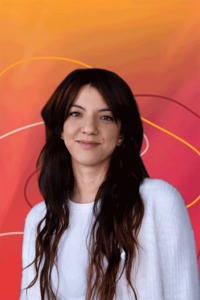
Mayumi Matsumiya
Born in 1988 in Brazil, she holds a Master's Degree in Visual Arts Curatorship and is currently pursuing a doctorate in Comparative Studies in Art. She attended the Anthroposophy Studies program at the Goetheanum from 2017 to 2018, where she developed parts of her Master's research. Mayumi has presented her findings at conferences in Brazil, Argentina, and at the Goetheanum. Currently, she is a collaborator of the Goetheanum Studium department.
Work Songs of Brazil: Memory, Rhythm and Collective Labor
Through traditional Brazilian work songs, participants will experience singing as a path to memory, community, and learning. The workshop offers simple, accessible songs that invite everyone to sing together, regardless of language or musical experience. Participants will explore how these living traditions can inspire educational practice, strengthen human connection, and awaken joy through shared music-making.
Cantos de Trabalho do Brasil: Memória, Ritmo e Trabalho Coletivo
Por meio dos tradicionais cantos de trabalho brasileiros, os participantes vivenciarão o canto como um caminho de memória, convivência e aprendizagem. A oficina propõe cantigas simples e acessíveis, que convidam todos a cantar juntos, independentemente da língua ou da experiência musical. Os participantes irão explorar como essas tradições vivas podem inspirar práticas educativas, fortalecer os vínculos humanos e despertar a alegria por meio da música compartilhada.
Renata Mattar
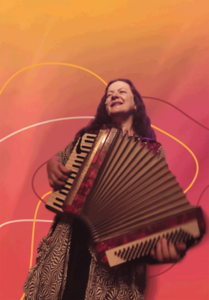
is a Brazilian singer, researcher, and educator dedicated to the study and transmission of traditional Brazilian work songs. For over 25 years, she has traveled throughout Brazil documenting songs preserved in rural and traditional communities.
Her artistic and educational work connects music, memory, cultural heritage, and collective learning, inspiring children, teachers, and families through singing as a living expression of culture and human connection.
Teaching Economics: A Phenomenological and Activity-Based Approach
Preparing young people for today’s economic reality is a vital responsibility for schools. Simply teaching how the economy works is not enough; students must develop the skills to actively shape it. To achieve this, we explore evidence-based strategies for the middle and high school levels, grounded in phenomenological and hands-on, action-oriented methodologies.
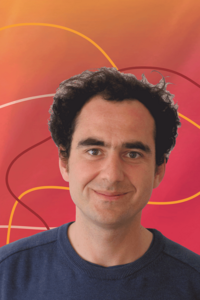
Fionn Meier
studied Environmental Sciences at ETH Zurich and Economics at the University of Freiburg, completing his master's thesis on «Money as Accounting: Historical and Theoretical Aspects.» He teaches economics at various Rudolf Steiner schools and co-authored the Swiss curriculum for economics. He is a member of the Economics Conference of the Goetheanum and the Managing Director of the Association for Social Threefolding Switzerland – Movement for Social Renewal.
De la imagen al hacer y del hacer al pensar
En la educación primaria, el trabajo surge de la imagen creativa ofrecida por el maestro, la cual el niño transforma en acción. En la educación secundaria, este trabajo se eleva: lo que antes era hacer, ahora se convierte también en una actividad del pensar.
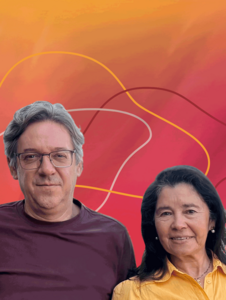
Hernán Melana
Writer and Waldorf teacher for twenty-six years. Lecturer in Waldorf trainings in Latin America and Spain. President of Fundación 27 de Febrero and vice-president of the Waldorf Federation.
Olga Lucía Rincón
Preschool Education graduate (Universidad San Buenaventura, Colombia). Waldorf teacher with 36 years of experience; class teacher from grades 1–8 in three cycles and kindergarten teacher for three years. Waldorf teacher trainer at Centro Humanístico Micael. Pedagogical advisor and current head of studies and primary/secondary coordinator at Escolasofía Waldorf School.
The Wonder of Words: Bringing them to life through Grammar and Spelling
It is possible for a child to learn Grammar concepts by discovering them in the words as they utter them – discovery through movement and engagement. I want to offer the view that Spelling is predictable and meaningful, and not, quixotic and arbitrary – a skill that does not have to rely on memory. It can be built through the process of investigating the word, finding that words have stories, and many fathers and mothers. Explore the progression of these two key skills in the primary school.
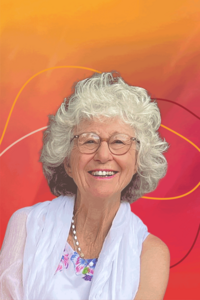
Louisa Oberholzer
has many years of experience teaching in a Waldorf classroom, as a class teacher and teacher trainer, including mentoring and observing. She worked for the Federation of Waldorf Schools in South Africa, participating in their academic standards survey of schools and developing an interest teaching literacy. She has written a series of books that sets out a literacy curriculum for Waldorf primary schools in Grammar, Writing and Speech and Handwriting Spelling and Reading. Louisa offers workshops to schools, including on-line, and mentoring for individual teachers.
Planetary Qualities in Highschools and the Awakening of the Will
Why this working group? Every student in secondary education learns and reacts differently. Waldorf pedagogy approaches this using the seven planet qualities (Saturn, Jupiter, Mars, Sun, Venus, Mercury, and Moon). These are seven archetypal characteristics or «ground tones» present within every human being. By recognizing these qualities in our teenagers, we can better tailor our teaching to their specific developmental needs. What will we do? In this practical working group, we will bridge the gap.
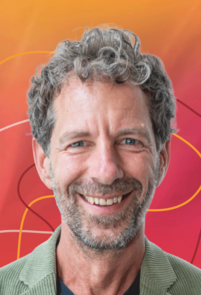
Elard Pijnaken
I have been working by BVS-Schooladvies since 2018. Initially as an advisor, from 2020 as a director/board member, and since April 1, 2026, once again as an advisor. Since April 2026, I have been the Program Manager at Leiden University of Applied Sciences for the Waldorf Teacher Training program, as well as for dance/eurythmy and music teachers. Throughout my career, I have served as a school principal and rector at various schools. The last school was the Marecollege in Leiden, where I thoroughly enjoyed shaping educational innovations.
Der Goetheanismus in den Methoden der Waldorfpädagogik
Rudolf Steiner wollte die Waldorfschule eigentlich «Goetheanismus Schule» nennen, erwähnt den Goetheanismus in seinen pädagogischen Vorträgen jedoch praktisch gar nicht, ein bemerkenswertes Paradoxon. Wenn wir jedoch alle Formen ausser Acht lassen, die die Waldorfpädagogik in den hundert Jahren ihres Bestehens entwickelt hat, und uns auf die elementaren methodischen Vorgehensweisen konzentrieren, entdecken wir Merkmale einer Methode, die wir getrost als goetheanistisch bezeichnen können.
Anhand konkreter Beispiele werden wir versuchen, diese grundlegenden methodischen Vorgehensweisen im Geiste des Goetheanismus zu beschreiben.
The Art of Listening in Teaching
In this working group, we explore listening as a core competence of educators. We examine how silence, genuine interest in others, and thoughtful questioning can transform teaching into an engaging, participatory process. Through dialogic methods and shared reflection, participants experience listening as both a personal and professional practice. The workshop invites participants to reconsider teaching as a profession fundamentally grounded in the capacity to listen instead of speaking.
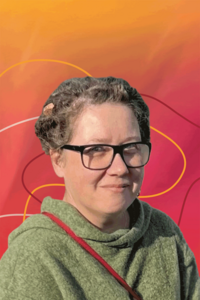
Eeva Raunela
PhD, is the principal of Snellman College, Finland, an experienced teacher educator, lecturer, and developer of Steiner/Waldorf pedagogy. With 15 years of experience as a Finnish language and literature teacher in Steiner school and nearly two decades in teacher education, her work focuses on dialogical teaching, listening as a core educational competence and language-aware pedagogy. Her forthcoming book, Listening in Teacher Education (with Aksel Hugo, Bloomsbury, 2027), explores listening as a central capacity in contemporary teacher education and pedagogical practice.
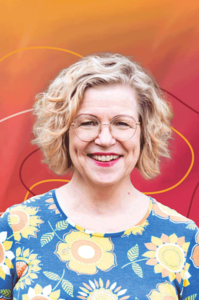
Helena Sandell
has worked as a classroom teacher at the Helsinki Rudolf Steiner School in Finland for over 20 years. Since retiring, she has served as a pedagogical and community mentor as well as a workplace mediator in Federation for Steiner Waldorf Education in Finland. She is also a member of the International Council for Steiner Waldorf Education (Hague Circle).
Developing and evaluating curriculum, taking account of local cultural and cosmopolitical perspectives
The developmental tasks facing children and young people today are very different from those a generation ago, let alone in the 1920s, not least when we consider the impact of AI on all walks of life. It is essential to provide students with a curriculum that is relevant to their needs today in whichever country they grow up in and they need to become world citizens. Furthermore, we feel that curriculum should include not only what is taught but how, where and when.
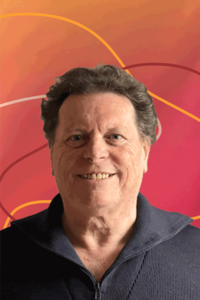
Martyn Rawson
born Glasgow, Scotland 1954. Has been class teacher, English as additional language, high school History, Art, in York, Stuttgart and Hamburg.
Currently Professor for Waldorf Education in International Contexts at Alanus University, Germany. Has published widely on Waldorf education, particularly issues relating to curriculum.
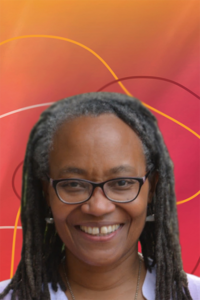
Linda Williams
Ph.D., born in Detroit Michigan, 1958 Recently retired class teacher from Detroit Waldorf School. Former Professor of Teacher Education, Eastern Michigan University.
Current member of the International Forum, Pedagogical Section Council of North America, Board member Association of Waldorf Schools of North America (AWSNA) and Sunbridge Institute. Co-founder of Alma Partners.
Pädagogische Konferenz – erfrischendes Lernen und Forschen im Team
Die wöchentliche Teamsitzung der Lehrpersonen und Erzieherinnen/Erzieher könnte eine fortlaufende Forschungs- und Fortbildungseinrichtung sein, – eine Form der Zusammenarbeit, die Innovation und Schulentwicklung, Begeisterung und Inspiration für die gemeinsame pädagogische Arbeit ermöglicht. Im Schulalltag gelingt das nicht immer. Umso wichtiger, regelmässig die Arbeitsformen der Pädagogischen Konferenz immer wieder neu zu greifen.
Le collège pédagogique – un cadre stimulant pour le soutien mutuel et la recherche en équipe
La réunion hebdomadaire de l'équipe pédagogique pourrait constituer un cadre permanent de recherche et de formation continue, une forme de collaboration favorisant l'innovation et le développement. Dans le quotidien de la vie de l'école, cela ne fonctionne pas toujours. Il est donc d'autant plus important de repenser régulièrement les modalités de fonctionnement de ces réunions.
Meetings of the pedagogical faculty – refreshing learning and research as a team
The weekly meeting of teachers and early years practitioners could serve as an ongoing forum for research and professional development, fostering innovation, school development, and enthusiasm and inspiration for our shared educational work. However, in the day-to-day running of the school, this does not always happen. This makes it all the more important to regularly revisit and refine those meetings' working methods.
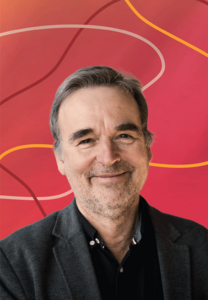
Philipp Reubke
Born in Stuttgart, studied philosophy and German language and literature, has worked as a Waldorf teacher in France since 1989, first as a German teacher at the Waldorf School in Colmar, since 1996 as a Waldorf kindergarten teacher, from 2011 to 2020 member of the coordination group of IASWECE (International Association for Steiner/Waldorf Early Childhood Education), member of the International Forum.
Since October 2020, he has been a member of the leadership of the Pedagogical Section, from 2022 together with Constanza Kaliks.
Spiritualität und Religion in der Waldorfpädagogik
Waldorfpädagogik begreift den Menschen als ein geistiges Wesen in Entwicklung. Um diese Entwicklung zu verstehen und zu fördern, muss sie selbst spirituellen Charakter annehmen. Was aber bedeutet hier Spiritualität, welche Voraussetzungen liegen ihr zugrunde, worin drückt sie sich aus? Welchen Beitrag kann die religiöse Erziehung dazu leisten? Zuletzt soll die Entwicklung des Kindes und Jugendlichen unter spirituellen, religiösen und theologischen Gesichtspunkten erörtert und besprochen werden.
Spirituality and Religion in Waldorf Education
Waldorf education views the human being as a spiritual being in the process of development. In order to understand and foster this development, the education itself must take on a spiritual character. But what does spirituality mean in this context? What are its underlying premises, and how is it expressed? What contribution can religious education make to this? Finally, the development of children and adolescents will be examined and discussed from spiritual, religious, and theological perspectives.
Methods of teaching and learning: grades 7 and upwards (or middle and upper school)
We will explore methods that engage and motivate young people to participate in learning processes and to actively contribute according to their abilities and interests — in thoughtfully designed learning environments that allow them to experience both their own sense of self-efficacy and the importance of community. We explore how differentiated, individualized feedback can guide and support young people on their journey.
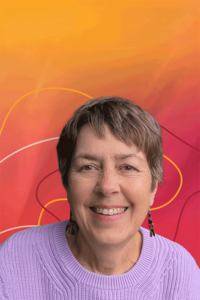
Ulrike Sievers
Seit 25 Jahren als Waldorflehrerin (Englisch, Biologie) und in der Lehrerausbildung tätig. Gründerin von elewa-eLearningWaldorf e.V., einer Online-Plattform für lebenslanges Lernens von Pädagog:innen. Partner bei HERMMES, EU-Projekt für gesunde Medienbildung. Herzensthemen: Lernprozesse verstehen und kreativ gestalten; Methodenvielfalt für Unterricht in vielfältigen Lerngruppen; Storytelling und kreatives Schreiben.
Stronger Together: Building School Associations
Founding and running a Waldorf school consists of many challenges that often feel overwhelming. Working with other schools sometimes feels like an extra work. But what if when we join with others, our own loads get less, rather than more? Coming together can mean sharing inspiration, resources, challenges, opportunities, and making our own work at the school easier, more meaningful and less alone. This is if the association of schools is created to respond to the needs of the schools.
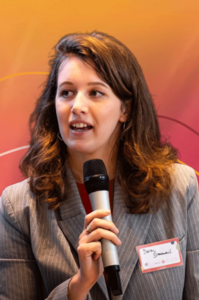
Dora Šimunović
has been active within the European Council for Steiner Waldorf Education for past 6 years as the Advocacy and PR coordinator, and is responsible for its European and international level advocacy (EU, UN, Council of Europe, OECD), especially in the field of digitalisation of education. She holds the Political Science Master’s degree from the University of Zagreb and is on the board of Primary and Secondary Waldorf School in Rijeka, Croatia.
Wie gut bin ich inkarniert zum Lernen und zur Arbeit? Austausch und Erfahrungen im Modellieren zum Thema des Embodiment als die Grundlage für Lernen und Arbeit
Die Erde bietet uns ein unendliches Lernfeld an. Als Mensch kann ich es erfahren durch all meine Sinne. Wenn ich gut geerdet bin, geht das Lernen und Arbeiten einfacher und unkomplizierter. Und wenn dazu die Geistesgegenwart und die achtsame Einfühlsamkeit kommen, lerne ich umfassend.
Wie kann ich diesen Einklang fördern? Durch die künstlerische Prozessarbeit im Modellieren, wollen wir hierzu Erfahrungen sammeln und daraus lernen – auch durch den Austausch.
How well am I incarnated for learning and working? Dialog and experiences withclay to this theme of embodiment as the foundation of learning and working
The earth gives us an immense field of learning. As a human I can experience it through all my senses. When I am well rooted, the learning and working goes easy and uncomplicated. And when thereto comes mindfull awareness and precense of mind, the learning will get comprehensive.
How can I improve this alignement? Through the artistic processwork in modelling, we will exercise to get there, and collect experiences and learning – also through sharing in the group.
Hvor vel inkarneret er jeg for at arbejde og lære? Vi vil udforske dette tema som grundlaget for at lære og arbejde - gennem vores hænders arbejde med ler
Jorden giver os et uendeligt læringsfelt, som vi kan erfare gennem alle vores sanser. Når jeg er jordforbundet går arbejde og læring let og ukompliceret. Når dertil kommer åndsnærværelse og opmærksom indlevelse, bliver læringen omfattende.
Hvordan kan jeg fremme denne tilstand? Gennem det kunstneriske proces-arbejde i modellering, vil vi øve os heri og samle erfaringer og læring, ligeledes gennem dialogen.
Play as the serious work of childhood
Imitation and meaningful activities, creativity and free play build physical, cognitive, and social skills, qualities that will enable the child to pave the path to the future.
El juego como labor seria de la infancia
La imitación y las actividades significativas, la creatividad y el juego libre desarrollan habilidades físicas, cognitivas y sociales, cualidades que permitirán al niño allanar el camino hacia el futuro.
Lourdes Tormes
is a early childhood educator and trainer in Spain.
She ist a coordinating group member of the International Association for Steiner/Waldorf Early Childhood Education IASWECE and member of the Hague Circle.
Dem Lesen auf der Spur: Implizites Lernen beim Schriftspracherwerb – Eine Erfahrungsreise
Wie fühlt es sich an, wenn die Welt der Symbole noch ungelesen vor uns liegt? Dieser Workshop lädt zu einem Perspektivenwechsel ein: Durch Selbsterfahrung erkunden wir, wie Kinder Symbolwelten erschliessen und welche Rolle das implizite Lernen dabei spielt.
Aufgebaut auf aktuellen Forschungsergebnissen reflektieren wir diese Selbsterfahrungen und erarbeiten praxisnahe Leitlinien für einen erfahrungsorientierten Unterricht.
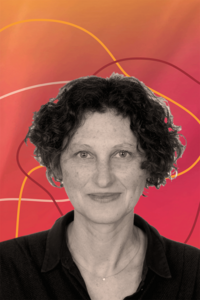
Heidemarie Vogt
Mag. Heidemarie Vogt, MA, Studium Französisch und Kunstgeschichte. Studium der Waldorfpädagogik an der Universität für Weiterbildung Krems/Zentrum für Kultur und Pädagogik.
Seit 2014 Mitarbeiterin am «Zentrum», seit 2023 wissenschaftliche Mitarbeiterin, Forschungsschwerpunkt: Schriftspracherwerb an Waldorfschulen. Fachlehrerin für Deutsch. Medienpädagogin. Legasthenietherapeutin.
Geschichte an den Waldorfschulen im Rahmen kultureller Diversität
Geschichtsunterricht an Waldorfschulen realisiert sich im Spannungsfeld einer auf Steiner zurückgeführten Kulturgeschichte und den Herausforderungen des modernen Kosmopolitismus. Daraus resultieren Fragen die Zielsetzung, die Methode, den Aufbau und die inhaltlichen Schwerpunktsetzungen. Mit diesen Facetten wollen wir uns über die Bedeutung historischer Bildung und die Gestaltung eines zeitgemäßen Unterrichts austauschen.
History in Waldorf Schools in the Context of Cultural Diversity
History teaching in Waldorf schools takes place at the intersection of a cultural history rooted in Steiner’s ideas and the challenges of modern cosmopolitanism. This gives rise to questions regarding the objectives, methodology, structure and focus of the subject matter. We wish to discuss these aspects in order to explore the significance of historical education and the design of contemporary lessons.
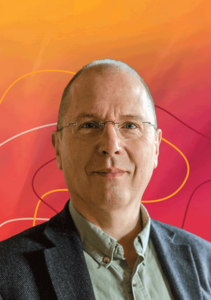
M. Michael Zech
Prof. Dr. M. Michael Zech, geboren 1957 in München, Waldorflehrer, Dozent in der Lehrerbildung und Professor für Kulturwissenschaften und ihre Didaktik an der Alanus Hochschule in Alfter.
Building strong school‑parent partnerships in today’s context
In the face of today’s unpredictable social environment and the challenges of declining birth rates, cultural differences, and individualism, how can we open the doors of our schools or kindergartens and invite parents to study and explore together ways of raising and educating children? How can we hold parent meetings and parent education activities in an artistic way? How can we build strong parent-school partnerships and welcome more families into this community? How can we face the reality of AI and electronic devices together with parents?
在當今背景下建立堅實的學校與家長夥伴關係
面对当今不可预测的社会环境,以及出生率下降、文化差异和个人主义的挑战,我们如何打开学校或幼儿园的大门,邀请家长一起来学习和探索养育和教育孩子的方法?我们如何用艺术化的方式举行家长会和家长教育活动?我们如何建立强大的家校合作伙伴关系,让更多家庭加入这个社区?我们如何与家长一起面对人工智能和电子设备的现实?
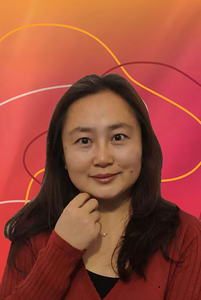
Li Zhang 在当今瞬息万变的世界
is from China. In 2004, she co-found the first Waldorf school in China, becoming the first Chinese Waldorf kindergarten teacher. She has been working for the school operations, teacher development and training course for 22 years. Currently, she chairs the Board of Directors of Chengdu Waldorf School, and coordinates the China Waldorf Early Childhood Education Working Group. She represents China on the IASWECE Council and the Hague Circle.